Smriti Batika
The memorial gardens created through Smriti Brichhya
The fenced and landscaped memorial gardens created through Smriti Brichhya — public land turned into maintained green space and handed back to the communities that own it.
Delivered through the Smriti Brichhya programme.
About this project
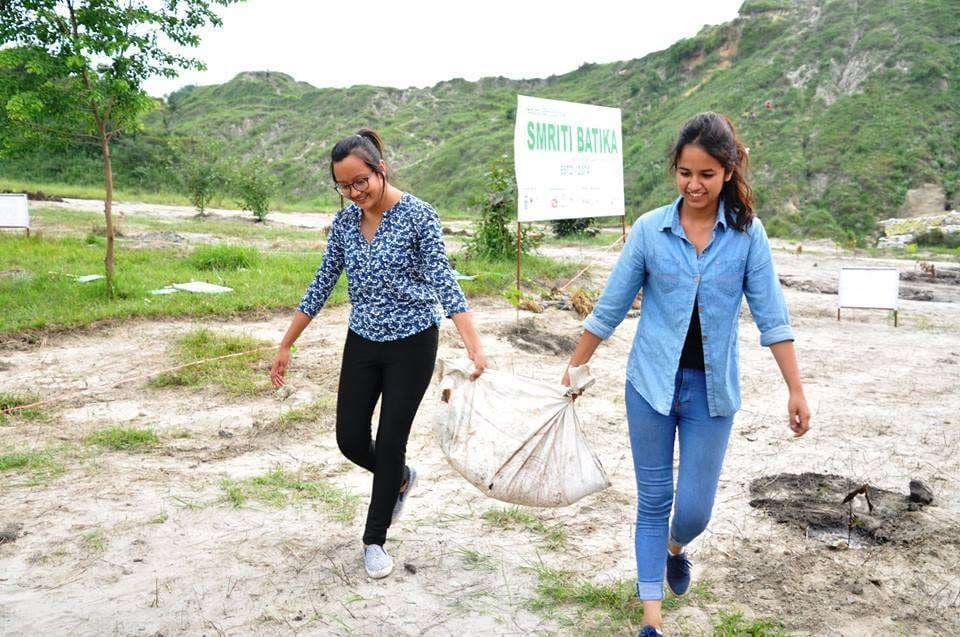
A Smriti Batika is what a Smriti Brichhya site becomes once it is fenced, structured and planted. Sites are only ever established on government, community or public land, designed with the relevant local government or community organisation, and laid out so that every commemorative tree can be located, named and looked after by the person who planted it.
The sites are deliberately chosen from land that is under pressure — dumping grounds, encroached school boundaries, neglected public plots. Before-and-after records document that change across seven locations in Dang, Kathmandu, Udayapur, Chitwan and Siraha. One site in Chaudandigadhi Municipality is known locally as Sagarmatha Smriti Batika, in Bhulke Ward No. 3; the batika at Shree Barahakshetra School in Ghorahi carries the campaign line “Ensuring local participation in combating global climate change.”
Each batika is maintained through the post-plantation phase — manuring, watering, pruning, security and status updates to the people who planted there — before being handed to the concerned community-based organisation or government agency for long-term care.
Project Details
- Locations
Mahendra High School, Tulsipur, Dang
Shree Barahakshetra School, Ghorahi, Dang
Kageshwori Manohara Municipality, Kathmandu
Triyuga Municipality, Udayapur
Chaudandigadhi Municipality, Udayapur
Bharatpur Metropolitan City, Chitrawan, Chitwan
Golbazaar Municipality, Siraha
- In cooperation with
Environment Friendly Local Governance Programme (EFLGP) / MoFALD, Government of Nepal
Host municipalities and local governments
Host schools and community-based organisations
Results
What came out of it
- Seven Smriti Batika sites documented with before-and-after site records across five districts.
- Public and institutional land protected from encroachment and dumping by putting it into active community use.
- Each site handed to a local body or community organisation for long-term management.
Gallery
Project Gallery
A few glimpses of the project's activities and conservation work.
Showing photographs 1 to 1 of 4
Be Part of the Change
Support youth, communities, and a more sustainable future — as a volunteer, partner, or donor.