Smriti Brichhya
The Commemorative Tree
A youth-led urban forestry campaign in which a tree is planted in memory of a loved one or to mark an occasion in life — binding personal sentiment to the survival of the plant.
About this project
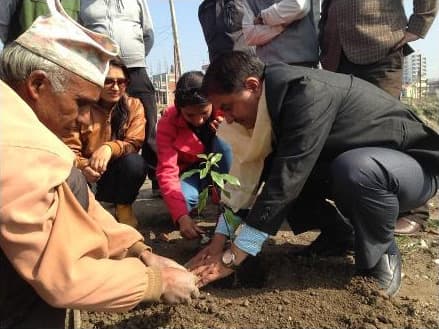
In a context where the survival of newly planted trees is a persistent question, Smriti Brichhya was designed to tie conservation to something people already care about. A commemorative tree is planted in the memory of a loved one, or on a special occasion, and the person who planted it keeps a stake in whether it lives. Each participant receives a national certificate of participation, a name tag or a place on the memory wall, and the GPS location of their tree.
The campaign responds directly to Nepal's urban forestry agenda, introduced by the Government of Nepal in fiscal year 070/71. In the phase documented here, supported by the Multi Stakeholder Forestry Programme, YONSED developed two fully engineered sites — one in Kathmandu and one in Dang. Participants ranged from political leaders, government officials and academicians to environmentalists, civil-society figures, I/NGO representatives and the general public.
The project taught YONSED that plantation is only one of its outcomes. It created social harmony around a shared sentiment, brought encroached public land back under protection, and — in cases the team recorded in the Kathmandu Valley — gave children their first contact with soil. Two sites and 2,200 plants will not move a national target on their own, but replicated across 25–30% of Nepal's urban and semi-urban areas, the model would build real climate resilience in towns while improving daily quality of life.
Goal
To contribute to the Government of Nepal's policy of increasing national forest cover to 40 percent, and to promote urban forestry and greenery in urban and semi-urban areas.
Project Details
- Duration
- 2009–Present
- Locations
14 municipalities across Nepal
- In cooperation with
Multi Stakeholder Forestry Programme (MSFP) / MoFSC, Government of Nepal
Environment Friendly Local Governance Programme (EFLGP) / MoFALD, Government of Nepal
Objectives
What this project set out to do
- 01
Increase greenery in urban and semi-urban areas through sustainable tree plantation.
- 02
Contribute to combating global climate change through plantation activities.
- 03
Promote a sentimental attachment between people and nature.
- 04
Channel financial resources from individuals across sectors willing to contribute to greenery development.
How It Works
Working modality
Phase I — Site establishment and plantation
- Site selection on government, community or public land only — never private land — in partnership with the relevant government agency or community-based organisation
- Engineering design of the site
- Motivating and confirming participants through campaigns, workshops, one-to-one communication, social marketing and media fellowship
- Fencing and structuring the plantation site, which is then named a Smriti Batika
- Plantation with species supplied by YONSED — locally suited, climate resilient, economic, religious or flowering, and not exceeding 12–15 ft at full growth
- Each participant receives a national certificate, a name tag or name on the memory wall, and the GPS location of their plant
Phase II — Post-plantation care
- Manuring and water supply
- Gardening and site security
- Status updates and communication to participants and donors
- Carbon mapping study
- Resource management training
- Ownership of conservation held for five years
Phase III — Handover
- After five years the Smriti Batika is handed over to the concerned community-based organisation or government agency, which takes on continued protection, management and long-term sustainability of the site
Project Sites
Where the work happened
Manohara River Corridor, Kathmandu
Originally a dumping site. The corridor runs 600 m long and roughly 14 m wide, designed to hold 1,000 plants — fully planted on World Environment Day 2014.
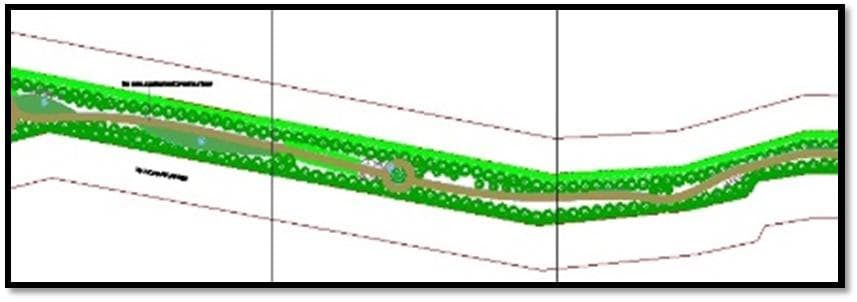
Activities carried out
- Signing MoU with Sinamangal Nagar Sewa Samaj
- Formation of Green Ambassadors
- Fencing and site management
- Inauguration of Smriti Batika
- Volunteer mobilisation
- Awareness campaign in the community
- Landscaping and restructuring the site
- Marking plantation blocks
- Management of soil, manure, irrigation and recommended plant species
- Preparation of name tags
- Development of pit holes
- Clean-up campaign
- World Environment Day celebration and extensive plantation
Mahendra Higher Secondary School, Tulasipur, Dang
3.75 hectares of school periphery facing land encroachment, brought under the project to protect the land and create green space within Tulasipur Municipality.
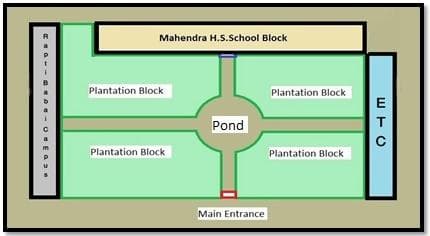
Activities carried out
- Signing MoU with Mahendra Higher Secondary School
- Formation of an Ex-Students' Committee at the school
- Interaction programme and awareness campaign
- Volunteer mobilisation
- Fencing and preliminary site management
- Detailed landscaping and restructuring the site
- Management of soil, manure, irrigation and recommended plant species
- Preparation of name tags
- Development of pit holes
- Clean-up campaign
- Official inauguration of Smriti Batika and extensive plantation
Results
What came out of it
- 2,200 trees planted across the two project sites.
- Two engineered Smriti Batika parks developed — 8,400 sq m in Kathmandu and 37,500 sq m in Dang.
- Participants returned regularly to check on, water and manure their own plants.
- Financial resources mobilised from both individuals and institutions for conservation of the plants and the environment.
- Four people employed for the protection and management of the Smriti Batika sites.
In the Media
- The Kathmandu Post and e-Kantipur — inauguration and plantation at the Manohara site
- Radio Rajdhani and Capital FM — interviews on the campaign
- Yugbodh, Rapti Post and Ganatantra — campaign and inauguration coverage in Dang
- Radio Prakriti — interviews and campaign news in Dang
Gallery
Project Gallery
A few glimpses of the project's activities and conservation work.
Showing photographs 1 to 1 of 29
1 / 29
Be Part of the Change
Support youth, communities, and a more sustainable future — as a volunteer, partner, or donor.