About YONSED
Who We Are
Youth Network for Social & Environmental Development is a national non-governmental organization, nepal founded in 2005 and based in Kathmandu. Registered with the Social Welfare Council (SWC No. 22144), we work at the intersection of environmental conservation and social development — powered by youth.
- Established 2005
- SWC No. 22144
- Kathmandu, Nepal
Our Vision
Enhance eco-friendly development of the nation.
Our Mission
Contribute in environmental conservation and social development activities at community and policy level by motivating, mobilizing, and empowering youth.
Our Objectives
What we set out to do
- 01
Environmental Advocacy
Enhance environmental advocacy and awareness at both local and policy level.
- 02
Youth Empowerment
Unite youth and students, strengthening them with environmental skills for sustainable consumption and management of natural resources.
- 03
Green Livelihoods
Promote green entrepreneurship to improve local livelihoods.
- 04
Ecotourism & Biodiversity
Contribute to ecotourism development and biodiversity conservation.
- 05
Scientific Approach
Explore and promote scientific and modern environmental tools and techniques.
What We Believe
Our values
The principles that shape how we work, drawn directly from our mission and governance practice.
- 01
Youth Empowerment
We motivate, mobilize, and equip young people to lead environmental and social action in their own communities.
- 02
Environmental Stewardship
Every program traces back to our founding purpose: an eco-friendly, sustainably managed Nepal.
- 03
Community Partnership
We work alongside municipalities, communities, and government bodies rather than apart from them.
- 04
Transparency & Accountability
Our accounts are externally audited every year, with income and expenditure reported openly to our General Assembly.
- 05
Science-Based Action
We favor modern, evidence-based environmental tools and techniques over guesswork.
Our Journey
Two decades of milestones
Major initiatives executed since our founding in 2005.
2005
YONSED Established
Founded in Kathmandu with a mandate to advance environmental conservation and social development through youth.
2007–2018
ENVIRON VISION I, II & III
A national environmental advocacy project delivered in cooperation with UNDP/GEF Small Grants Programme.
2008–2011
Ecotourism Potential Study
Planning study on tourism and ecotourism potential sites of Dang and Pyuthan, with related District Development Committees and the Nepal Tourism Board.
2009–Present
Smriti Brichhya Launched
A youth-led nature conservation and tree-plantation campaign, active across 14 municipalities with EFLGP/MoFALD and the Multi Stakeholder Forestry Programme.
2011
Youth in Environ Profession & Rasuwa Field Study
Launched the YEP training initiative with Starbucks Foundation and International Youth Foundation, and completed a water-spring GPS database and climate-change case study with WWF Nepal in Langtang National Park, Rasuwa.
2015–2016
Post-Earthquake School Infrastructure
Supported eco-friendly school infrastructure development in earthquake-affected Gorkha district with local VDCs and CHAY YA, Austria.
Ongoing
Community-Based Waste Management
Active waste management project across five municipalities in Dhanusha and Saptari, with local governments and the Environment Friendly Local Governance Project.
Governance
How YONSED is organized
The Board is overall responsible for plans, policy, and project development. The Executive Committee implements those decisions through staff, and reports back through regular monitoring and evaluation.
Governance Structure
General Assembly
Board Committee
guided by an Advisor
Executive Committee
Coordinators as members, Prime Coordinator as Member Secretary, Chairperson as Secretary
Prime Coordinator
Operating Units
Research Unit
Coordinator and supporting staff leading research and field studies.
Capacity Building Unit
Coordinator and supporting staff running training and skill-building programs.
Information & Communication Unit
Coordinator and supporting staff managing outreach and communication.
Account
Accountant managing income, expenditure, and financial reporting.
Board Committee
Guided by experienced professionals
Our Board Committee brings together specialists in environmental science, GIS, and rural development.
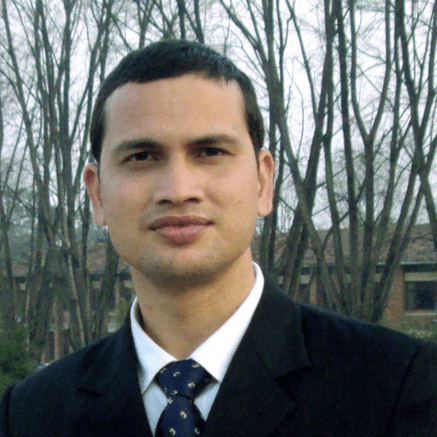
Jeevan Thapa
Environment, Climate Change, Natural Resource Management, Ecotourism
Master's Degree in Environmental Science
Puja Jha
Environmental Science
Master's Degree in Environmental Science
Nawaraj Tiwari
Environmental Science, Wildlife, Biodiversity, GIS
Master's Degree in GIS
Kamal Thapa
Environmental Science, Climate Change, GIS
Master's Degree in Environmental Science
Sumnima Shrestha
Environmental Science, Climate Change, Forestry
Master's Degree in Environmental Science
Yubaraj Satyal
Environmental Science, Climate Change, Water Resource Management
Master's Degree in Environmental Science
Ram Maharjan
Environmental Science, Energy
Master's Degree in Environmental Science
Prerna Kuwor
Environment, Climate Change, Agriculture
Master's Degree in Environmental Science
Worked With




Be Part of the Change
Support youth, communities, and a more sustainable future — as a volunteer, partner, or donor.